

[UPDATED 2023] CKAD dumps Free Test Engine Verified By Certified Experts
Realistic CKAD Accurate & Verified Answers As Experienced in the Actual Test!
The Linux Foundation CKAD (Linux Foundation Certified Kubernetes Application Developer) Certification Exam is a rigorous and comprehensive exam designed to test the skills and knowledge of developers who work with Kubernetes. Kubernetes is an open-source container orchestration system that has become the de facto standard for managing containerized applications. The CKAD certification is designed to validate a developer's ability to deploy, configure, and manage applications on Kubernetes.
The CKAD exam is designed to test the practical skills of developers in creating and deploying cloud-native applications on Kubernetes platforms. The exam assesses the ability of developers to design, build, and troubleshoot Kubernetes applications, including skills in container orchestration, Kubernetes API primitives, and core concepts in Kubernetes architecture. The certification is aimed at developers who are looking to enhance their skills in Kubernetes application development and demonstrate their proficiency to potential employers. The CKAD certification is also an essential prerequisite for developers looking to pursue advanced certifications in Kubernetes, such as the Certified Kubernetes Administrator (CKA) certification.
NEW QUESTION # 16 
Context
You have been tasked with scaling an existing deployment for availability, and creating a service to expose the deployment within your infrastructure.
Task
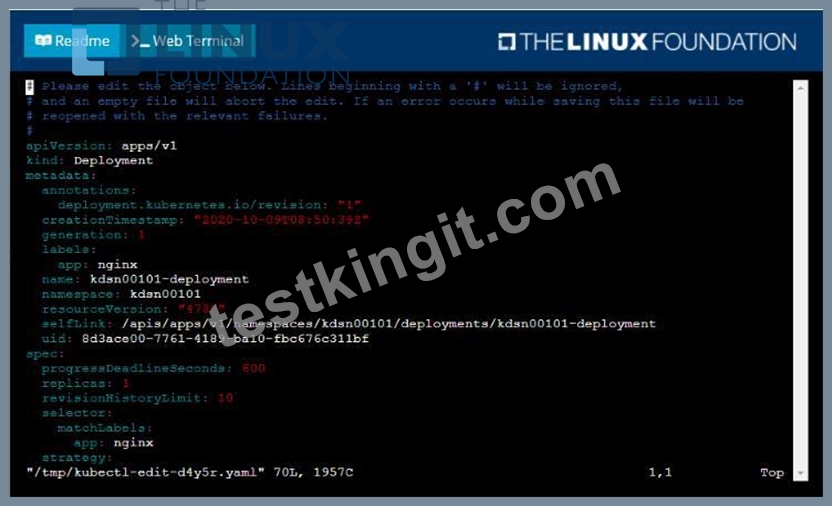
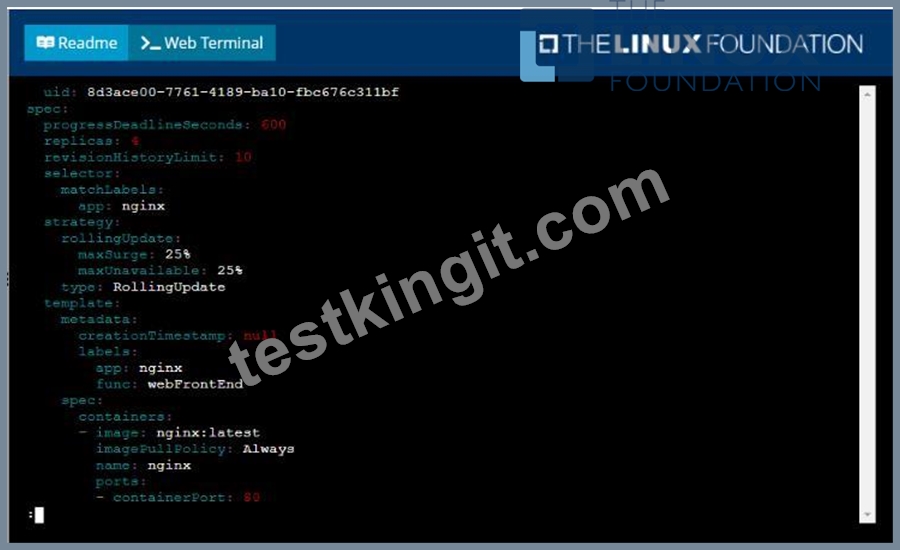
Start with the deployment named kdsn00101-deployment which has already been deployed to the namespace kdsn00101 . Edit it to:
* Add the func=webFrontEnd key/value label to the pod template metadata to identify the pod for the service definition
* Have 4 replicas
Next, create ana deploy in namespace kdsn00l01 a service that accomplishes the following:
* Exposes the service on TCP port 8080
* is mapped to me pods defined by the specification of kdsn00l01-deployment
* Is of type NodePort
* Has a name of cherry
Answer:
Explanation:
See the solution below.
Explanation
Solution:

NEW QUESTION # 17
Context
Task:
A Dockerfile has been prepared at -/human-stork/build/Dockerfile
1) Using the prepared Dockerfile, build a container image with the name macque and lag 3.0. You may install and use the tool of your choice.
2) Using the tool of your choice export the built container image in OC-format and store it at -/human stork/macque 3.0 tar
Answer:
Explanation:
Solution: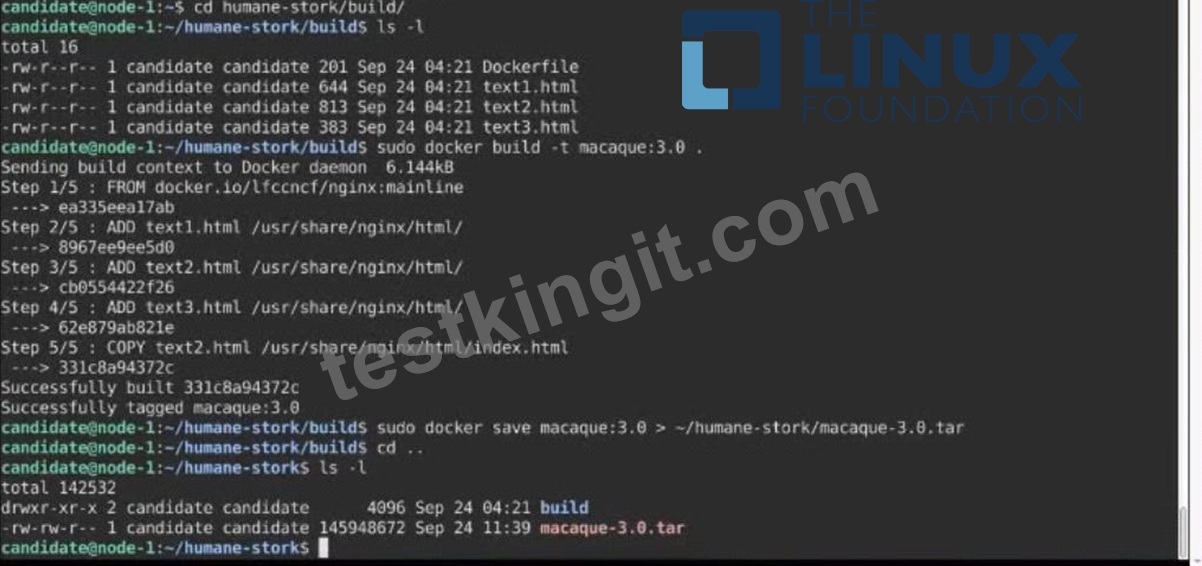
NEW QUESTION # 18
Context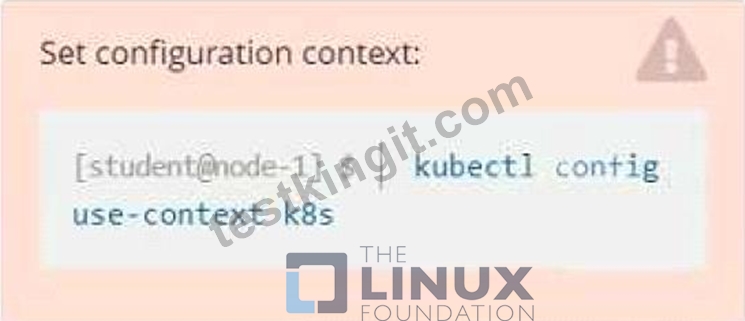
Context
You have been tasked with scaling an existing deployment for availability, and creating a service to expose the deployment within your infrastructure.
Task
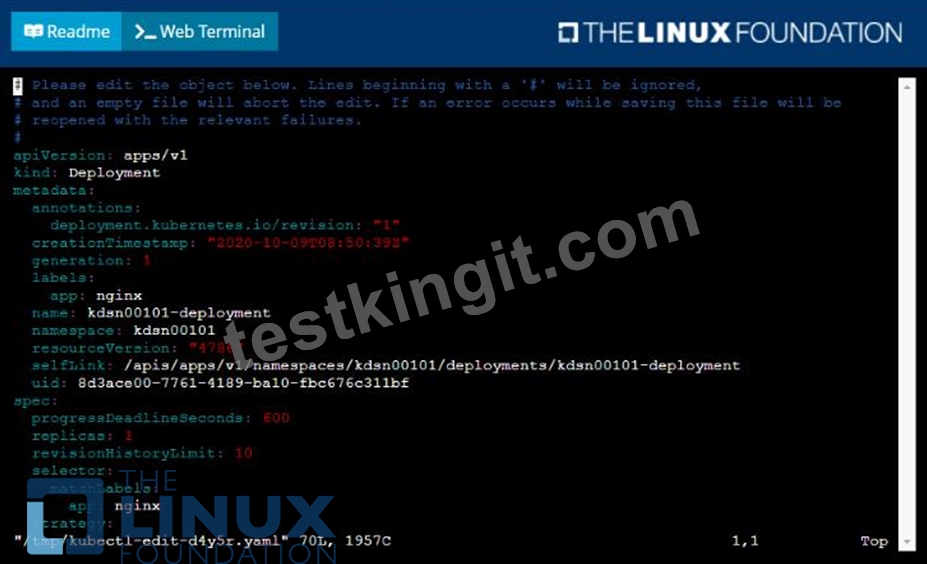
Start with the deployment named kdsn00101-deployment which has already been deployed to the namespace kdsn00101 . Edit it to:
* Add the func=webFrontEnd key/value label to the pod template metadata to identify the pod for the service definition
* Have 4 replicas
Next, create ana deploy in namespace kdsn00l01 a service that accomplishes the following:
* Exposes the service on TCP port 8080
* is mapped to me pods defined by the specification of kdsn00l01-deployment
* Is of type NodePort
* Has a name of cherry
Answer:
Explanation:
Solution:


NEW QUESTION # 19
Context
Task
You have rolled out a new pod to your infrastructure and now you need to allow it to communicate with the web and storage pods but nothing else. Given the running pod kdsn00201 -newpod edit it to use a network policy that will allow it to send and receive traffic only to and from the web and storage pods.

Answer:
Explanation:
apiVersion: networking.k8s.io/v1
kind: NetworkPolicy
metadata:
name: internal-policy
namespace: default
spec:
podSelector:
matchLabels:
name: internal
policyTypes:
- Egress
- Ingress
ingress:
- {}
egress:
- to:
- podSelector:
matchLabels:
name: mysql
ports:
- protocol: TCP
port: 3306
- to:
- podSelector:
matchLabels:
name: payroll
ports:
- protocol: TCP
port: 8080
- ports:
- port: 53
protocol: UDP
- port: 53
protocol: TCP
NEW QUESTION # 20
Refer to Exhibit.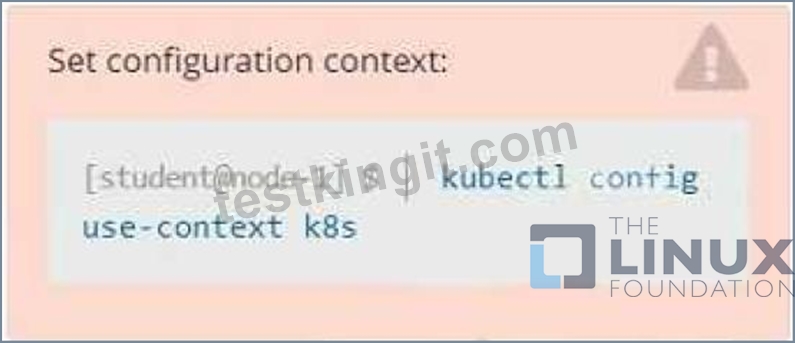
Context
You have been tasked with scaling an existing deployment for availability, and creating a service to expose the deployment within your infrastructure.
Task
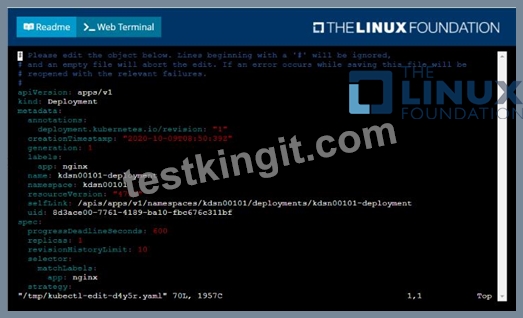
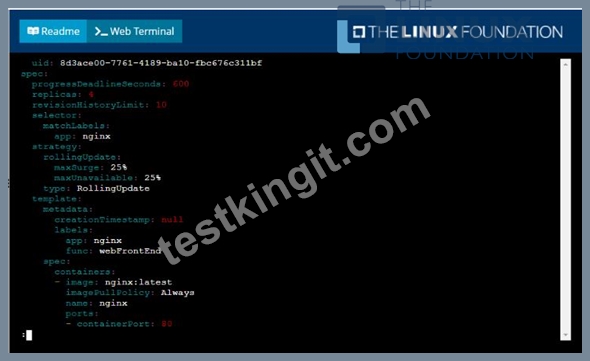
Start with the deployment named kdsn00101-deployment which has already been deployed to the namespace kdsn00101 . Edit it to:
* Add the func=webFrontEnd key/value label to the pod template metadata to identify the pod for the service definition
* Have 4 replicas
Next, create ana deploy in namespace kdsn00l01 a service that accomplishes the following:
* Exposes the service on TCP port 8080
* is mapped to me pods defined by the specification of kdsn00l01-deployment
* Is of type NodePort
* Has a name of cherry
Answer:
Explanation:
Solution:

NEW QUESTION # 21
Refer to Exhibit.
Context
You are tasked to create a ConfigMap and consume the ConfigMap in a pod using a volume mount.
Task
Please complete the following:
* Create a ConfigMap named another-config containing the key/value pair: key4/value3
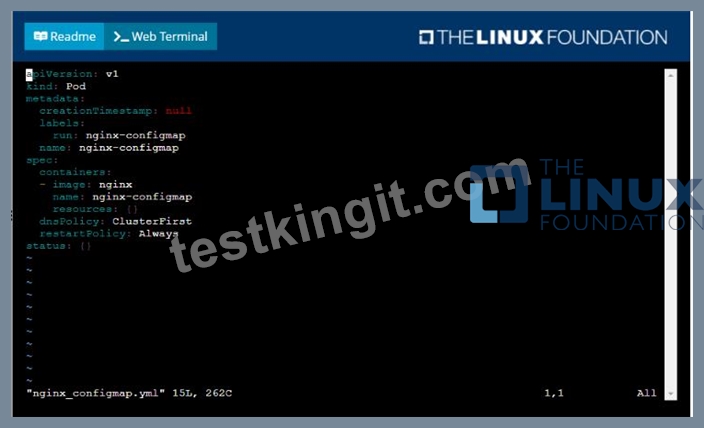
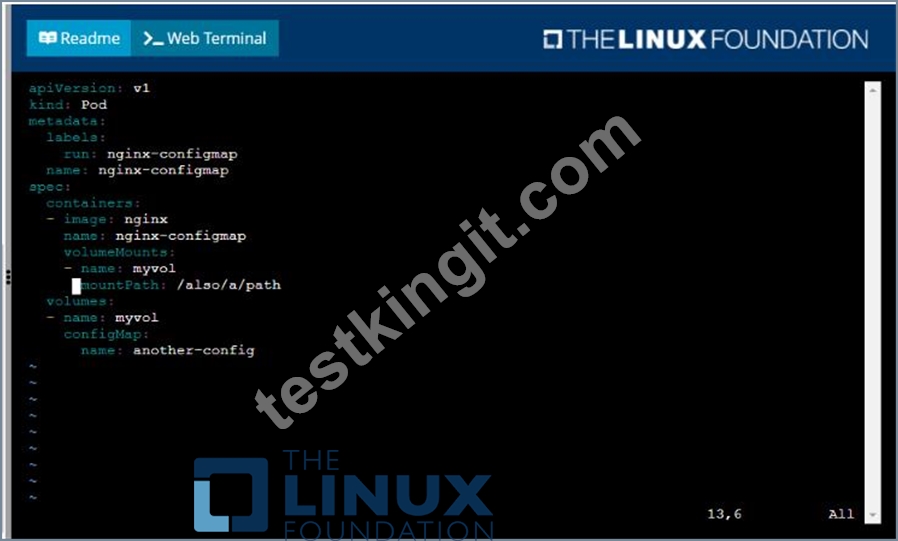
* start a pod named nginx-configmap containing a single container using the nginx image, and mount the key you just created into the pod under directory /also/a/path
Answer:
Explanation:
Solution: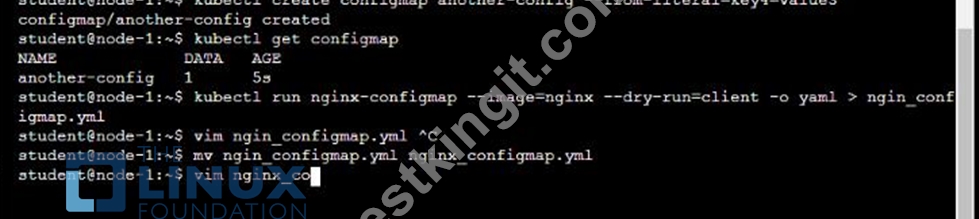
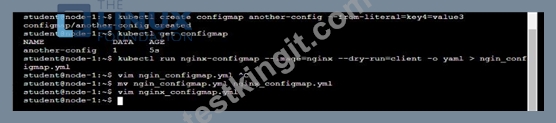
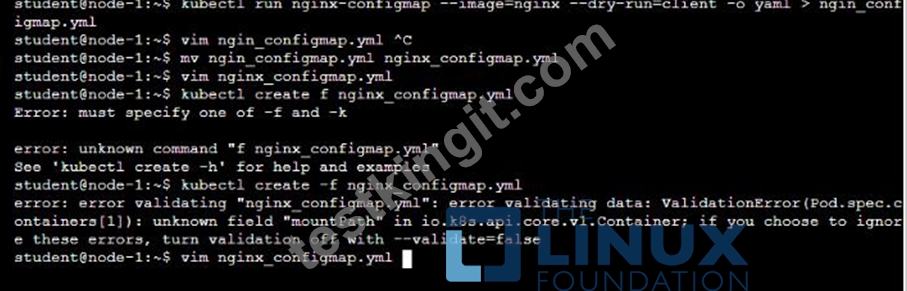
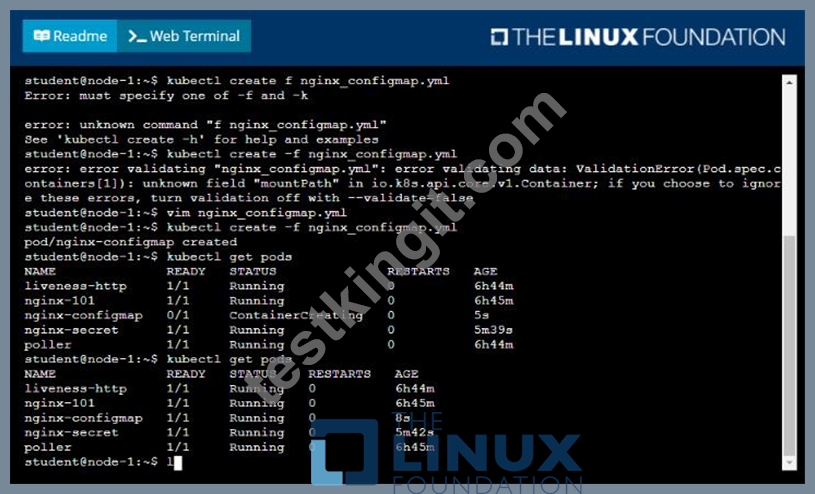
NEW QUESTION # 22 
Context
You are asked to prepare a Canary deployment for testing a new application release.
Task:
A Service named krill-Service in the goshark namespace points to 5 pod created by the Deployment named current-krill-deployment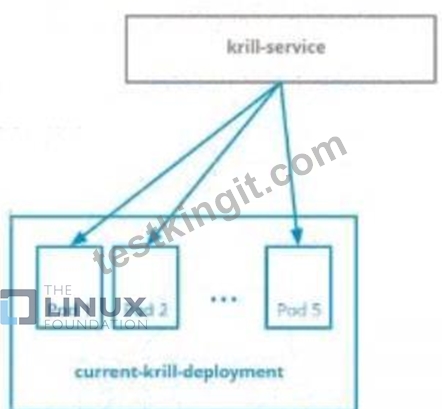
1) Create an identical Deployment named canary-kill-deployment, in the same namespace.
2) Modify the Deployment so that:
-A maximum number of 10 pods run in the goshawk namespace.
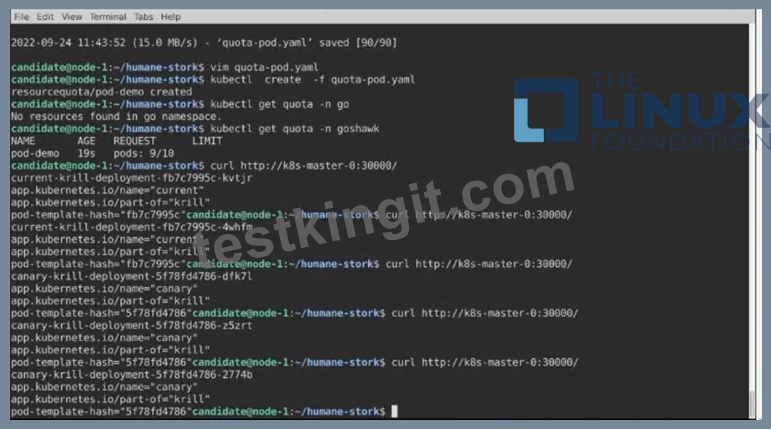
-40% of the krill-service 's traffic goes to the canary-krill-deployment pod(s)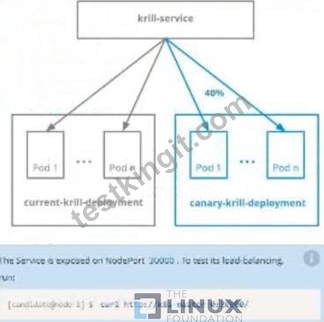
Answer:
Explanation:
See the solution below.
Explanation
Solution:
Text Description automatically generated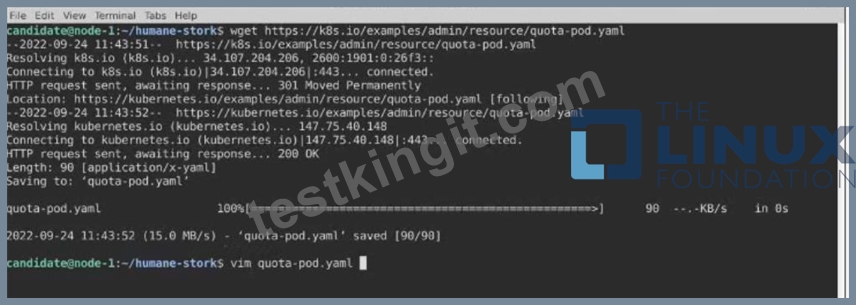
NEW QUESTION # 23
Exhibit:
Task
You are required to create a pod that requests a certain amount of CPU and memory, so it gets scheduled to-a node that has those resources available.
* Create a pod named nginx-resources in the pod-resources namespace that requests a minimum of 200m CPU and 1Gi memory for its container
* The pod should use the nginx image
* The pod-resources namespace has already been created
- A. Solution:


- B. Solution:

Answer: B
NEW QUESTION # 24
Exhibit:
Context
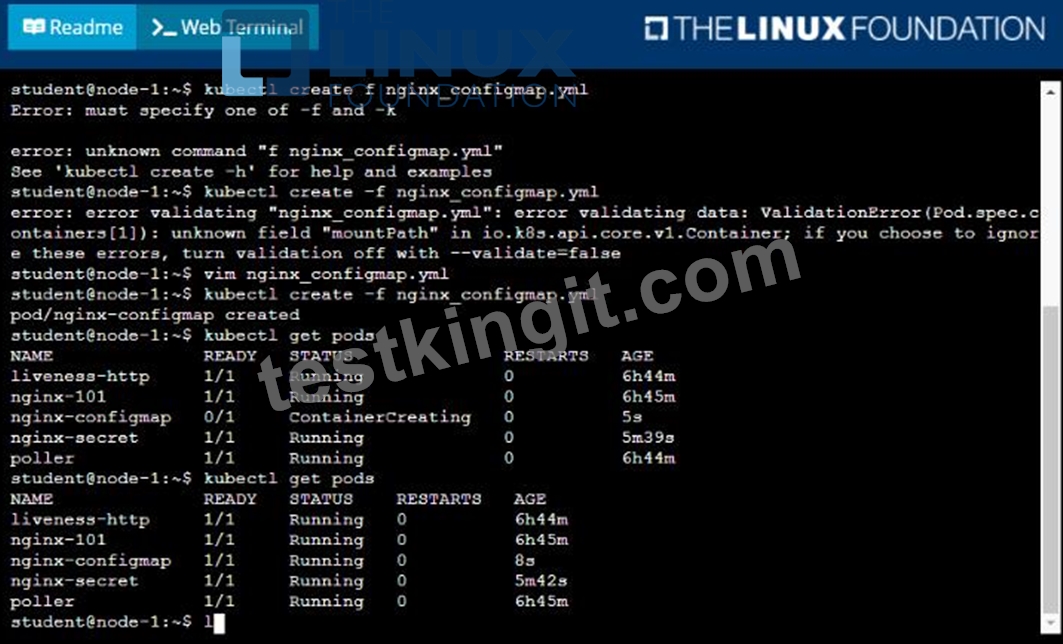
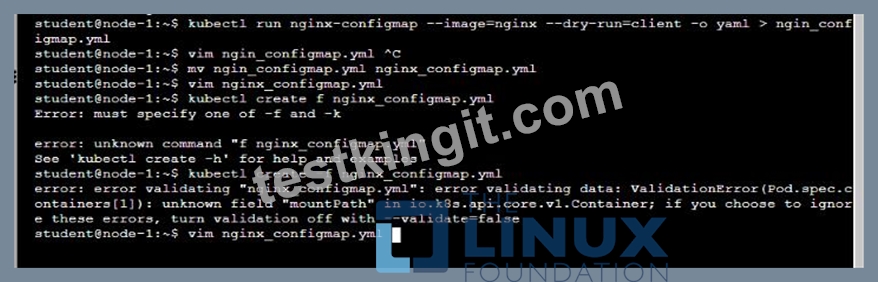
You are tasked to create a ConfigMap and consume the ConfigMap in a pod using a volume mount.
Task
Please complete the following:
* Create a ConfigMap named another-config containing the key/value pair: key4/value3
* start a pod named nginx-configmap containing a single container using the
nginx image, and mount the key you just created into the pod under directory /also/a/path
- A. Solution:
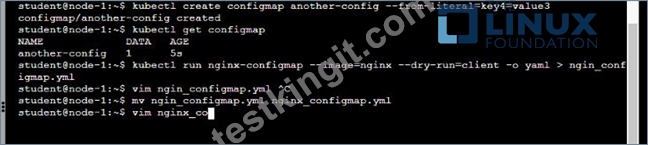
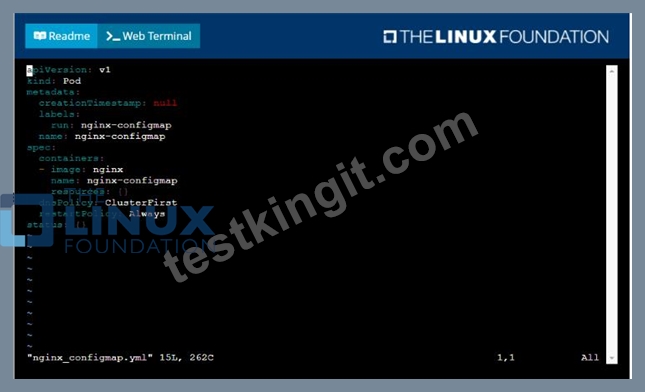
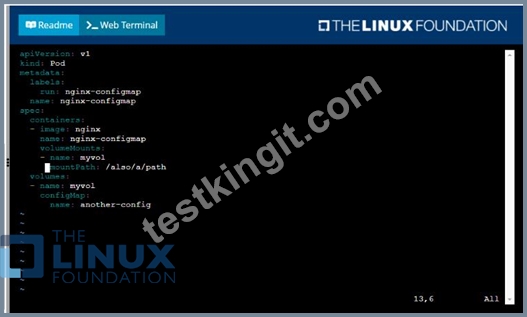
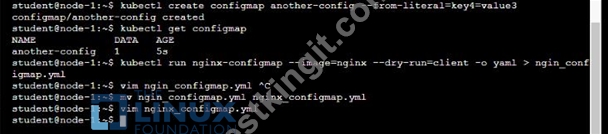
- B. Solution:
Answer: B
NEW QUESTION # 25
Refer to Exhibit.
Set Configuration Context:
[student@node-1] $ | kubectl
Config use-context k8s
Context
A pod is running on the cluster but it is not responding.
Task
The desired behavior is to have Kubemetes restart the pod when an endpoint returns an HTTP 500 on the /healthz endpoint. The service, probe-pod, should never send traffic to the pod while it is failing. Please complete the following:
* The application has an endpoint, /started, that will indicate if it can accept traffic by returning an HTTP 200. If the endpoint returns an HTTP 500, the application has not yet finished initialization.
* The application has another endpoint /healthz that will indicate if the application is still working as expected by returning an HTTP 200. If the endpoint returns an HTTP 500 the application is no longer responsive.
* Configure the probe-pod pod provided to use these endpoints
* The probes should use port 8080
Answer:
Explanation:
Solution:
To have Kubernetes automatically restart a pod when an endpoint returns an HTTP 500 on the /healthz endpoint, you will need to configure liveness and readiness probes on the pod.
First, you will need to create a livenessProbe and a readinessProbe in the pod's definition yaml file. The livenessProbe will check the /healthz endpoint, and if it returns an HTTP 500, the pod will be restarted. The readinessProbe will check the /started endpoint, and if it returns an HTTP 500, the pod will not receive traffic.
Here's an example of how you can configure the liveness and readiness probes in the pod definition yaml file:
apiVersion: v1
kind: Pod
metadata:
name: probe-pod
spec:
containers:
- name: probe-pod
image: <image-name>
ports:
- containerPort: 8080
livenessProbe:
httpGet:
path: /healthz
port: 8080
initialDelaySeconds: 15
periodSeconds: 10
failureThreshold: 3
readinessProbe:
httpGet:
path: /started
port: 8080
initialDelaySeconds: 15
periodSeconds: 10
failureThreshold: 3
The httpGet specifies the endpoint to check and the port to use. The initialDelaySeconds is the amount of time the pod will wait before starting the probe. periodSeconds is the amount of time between each probe check, and the failureThreshold is the number of failed probes before the pod is considered unresponsive.
You can use kubectl to create the pod by running the following command:
kubectl apply -f <filename>.yaml
Once the pod is created, Kubernetes will start monitoring it using the configured liveness and readiness probes. If the /healthz endpoint returns an HTTP 500, the pod will be restarted. If the /started endpoint returns an HTTP 500, the pod will not receive traffic.
Please note that if the failure threshold is set to 3, it means that if the probe fails 3 times consecutively it will be considered as a failure.
The above configuration assumes that the application is running on port 8080 and the endpoints are available on the same port.
NEW QUESTION # 26
Context
Task
A Deployment named backend-deployment in namespace staging runs a web application on port 8081.
Answer:
Explanation:
Solution:


NEW QUESTION # 27
Context
Task:
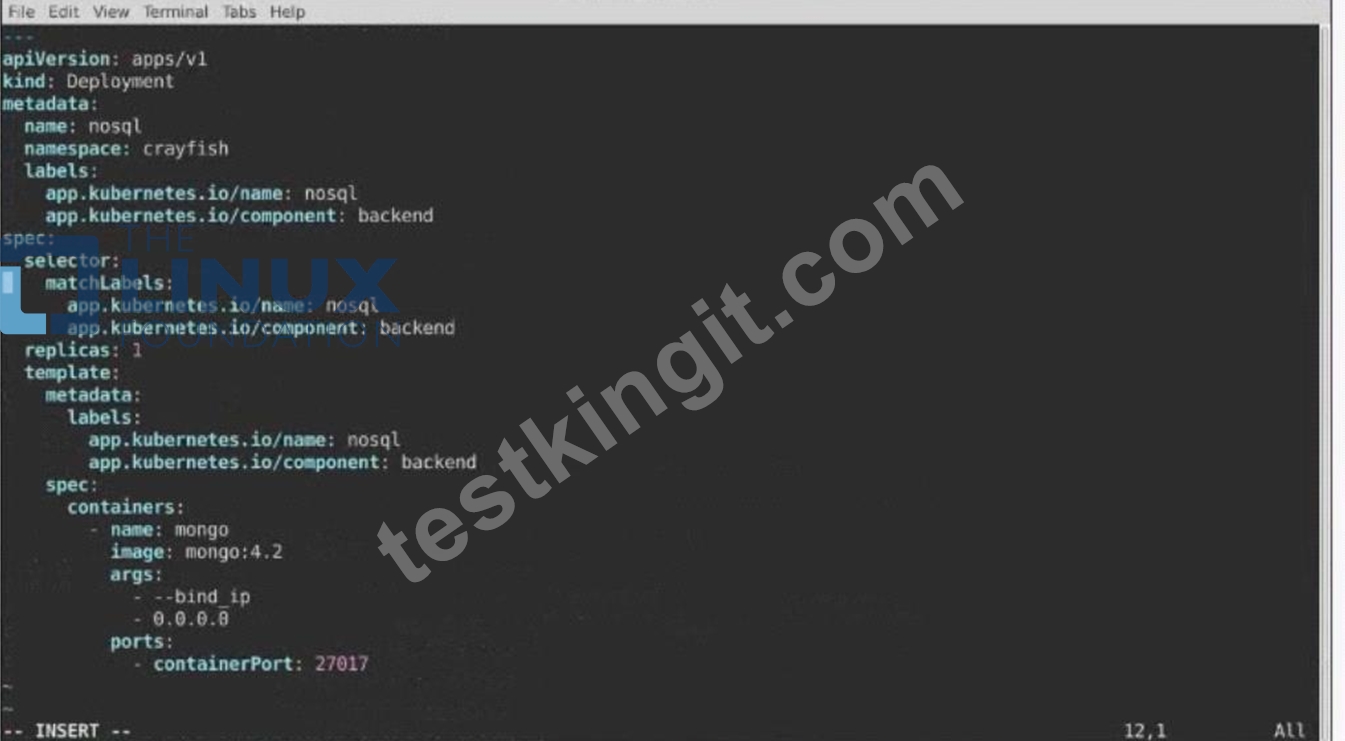
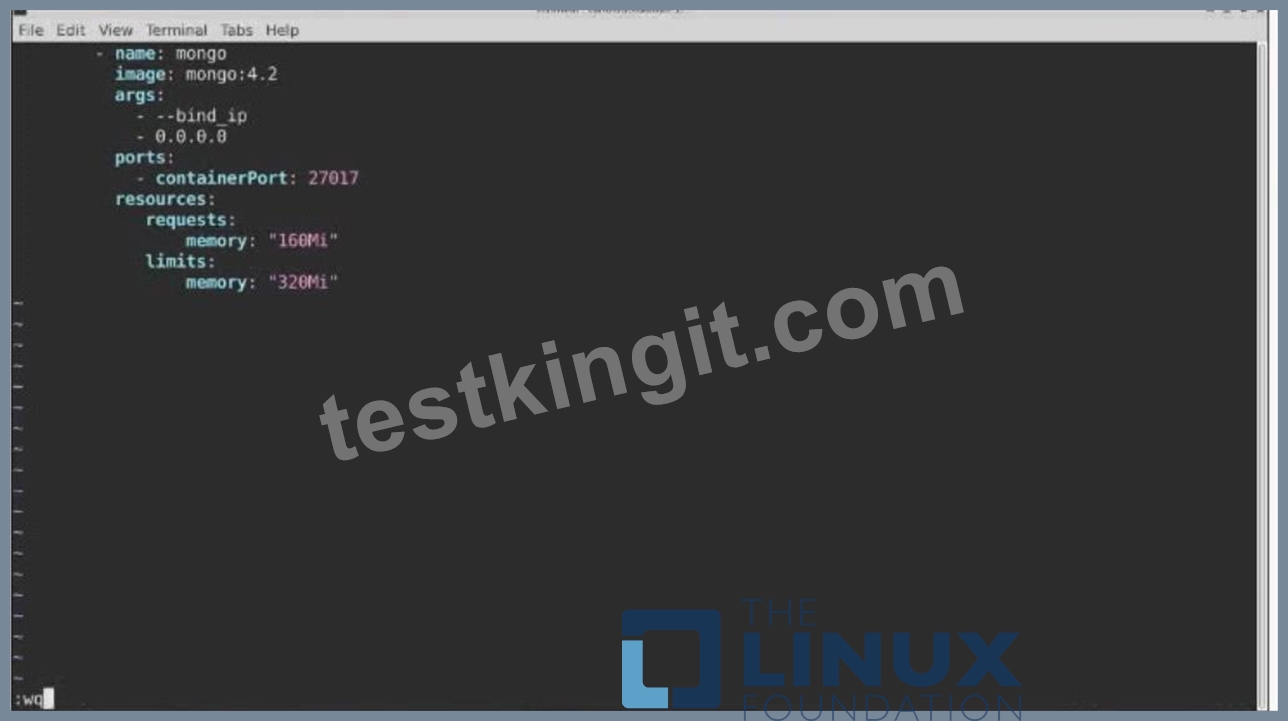
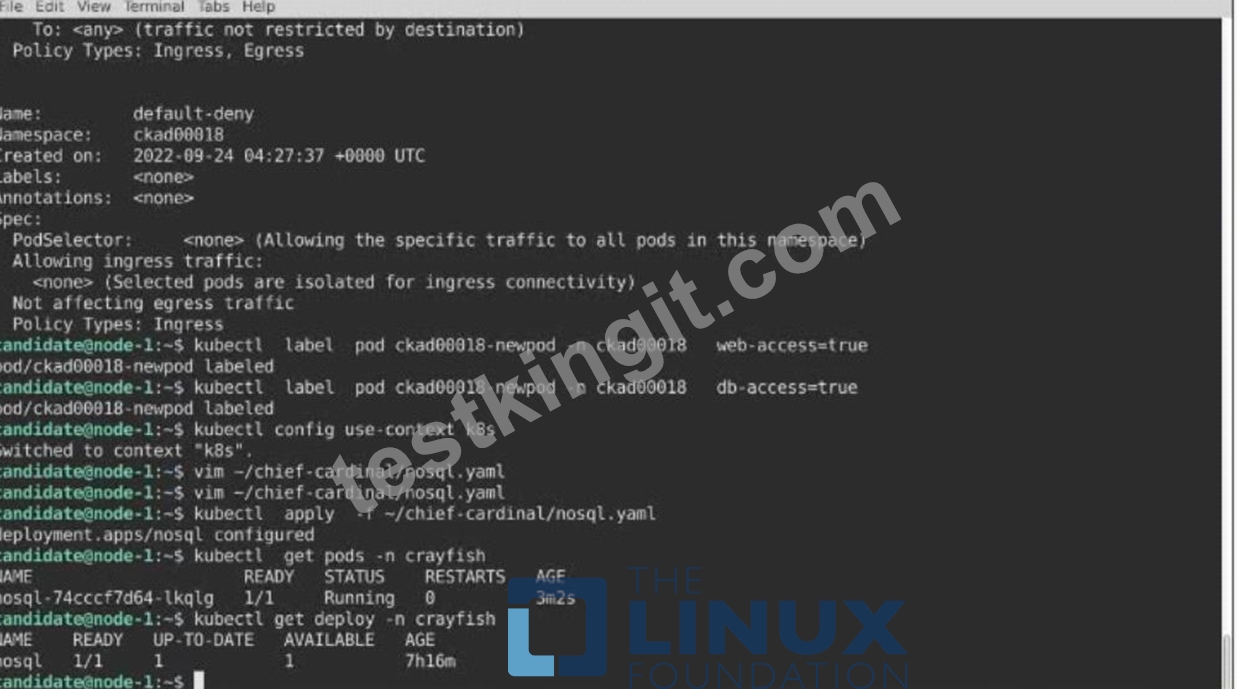
The pod for the Deployment named nosql in the craytisn namespace fails to start because its container runs out of resources.
Update the nosol Deployment so that the Pod:
1) Request 160M of memory for its Container
2) Limits the memory to half the maximum memory constraint set for the crayfah name space.
Answer:
Explanation:
Solution:
NEW QUESTION # 28
Refer to Exhibit.
Task:
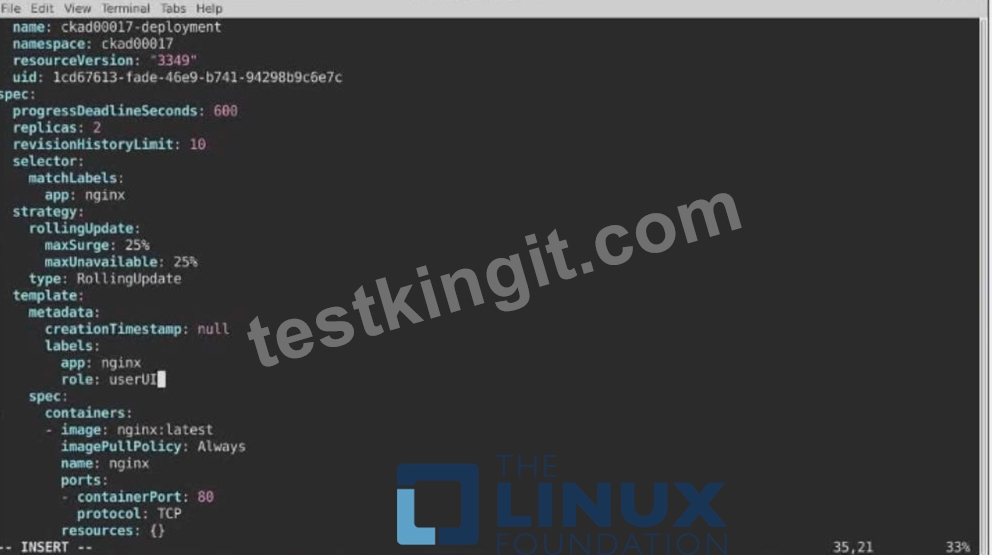
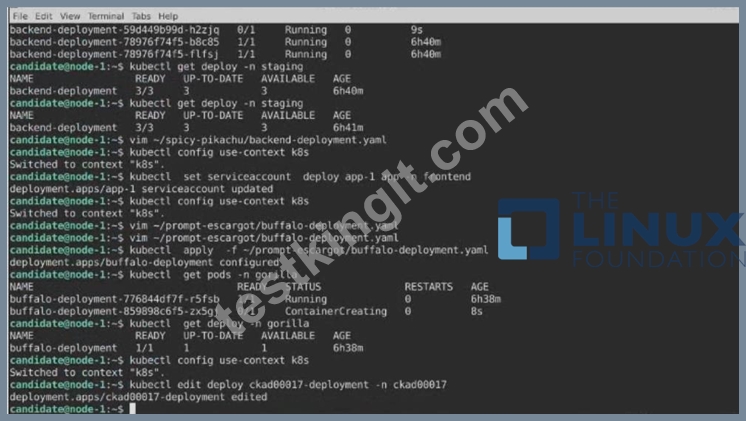
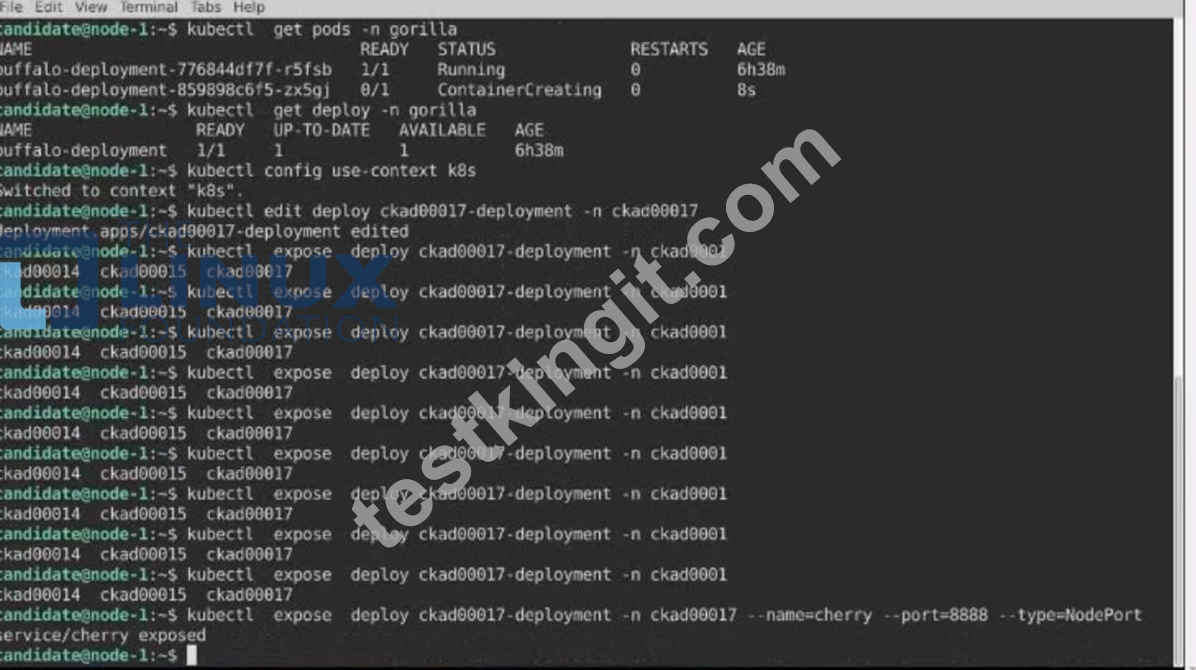
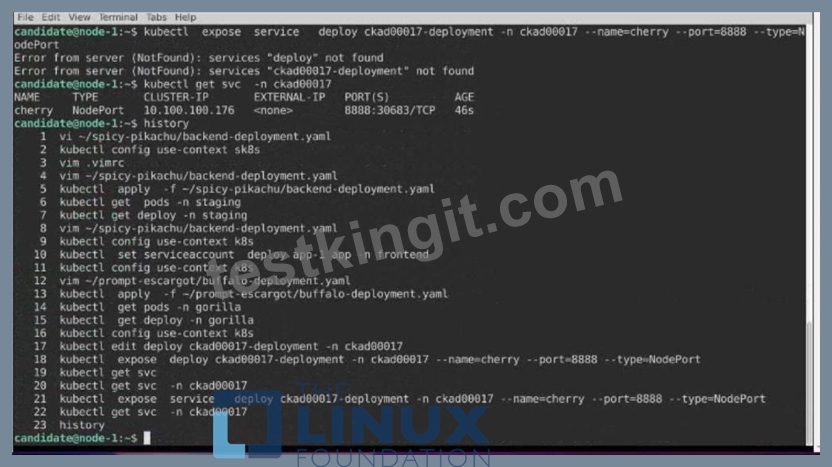
1) First update the Deployment cka00017-deployment in the ckad00017 namespace:
*To run 2 replicas of the pod
*Add the following label on the pod:
Role userUI
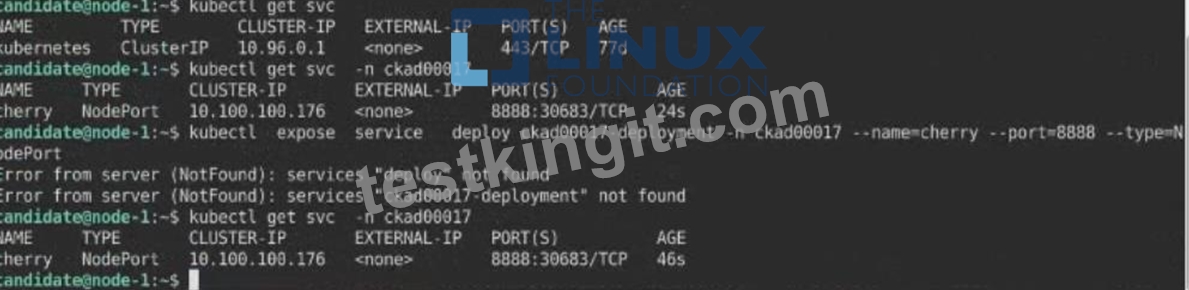
2) Next, Create a NodePort Service named cherry in the ckad00017 nmespace exposing the ckad00017-deployment Deployment on TCP port 8888
Answer:
Explanation:
Solution: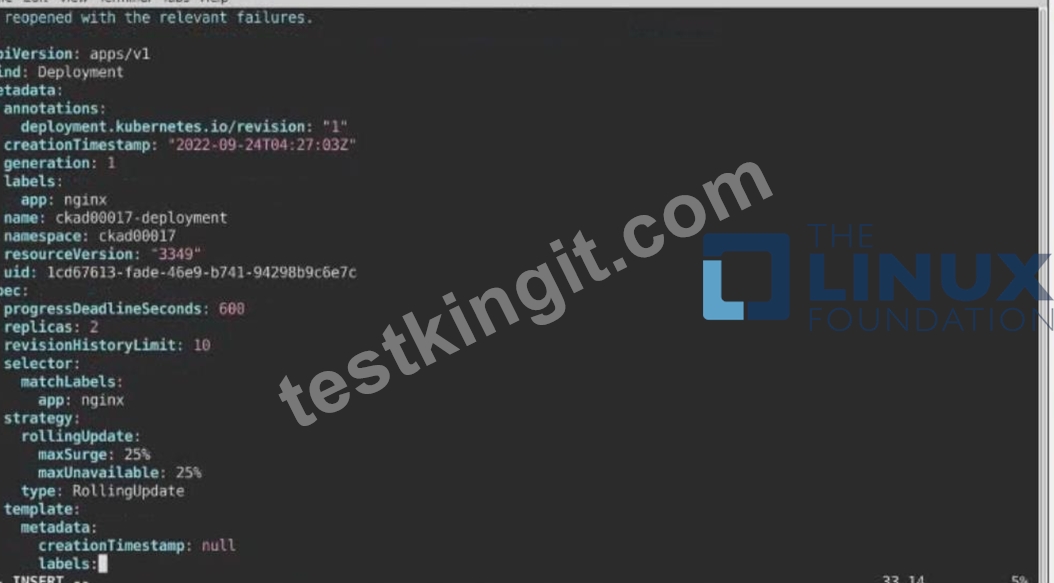
NEW QUESTION # 29
Context
Task:
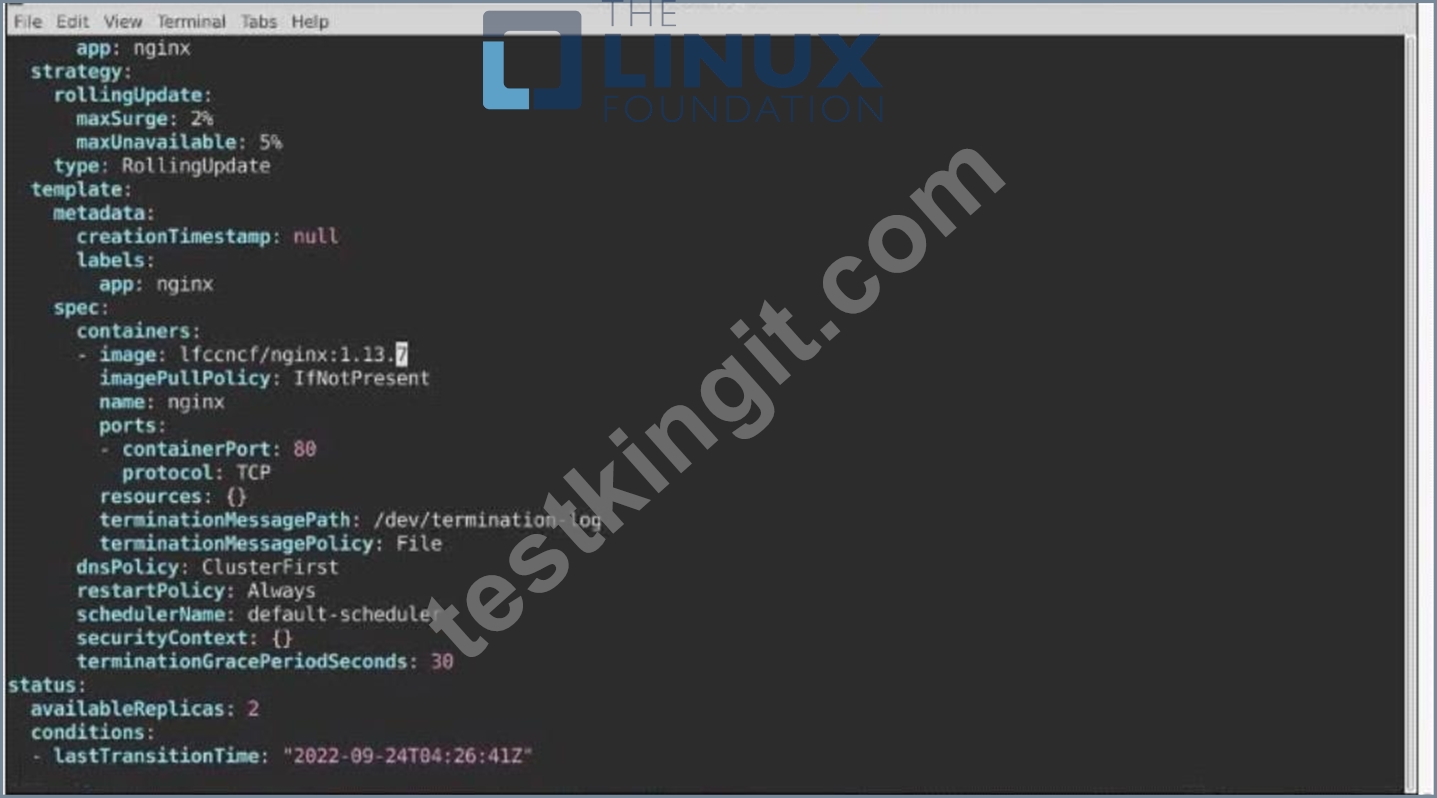
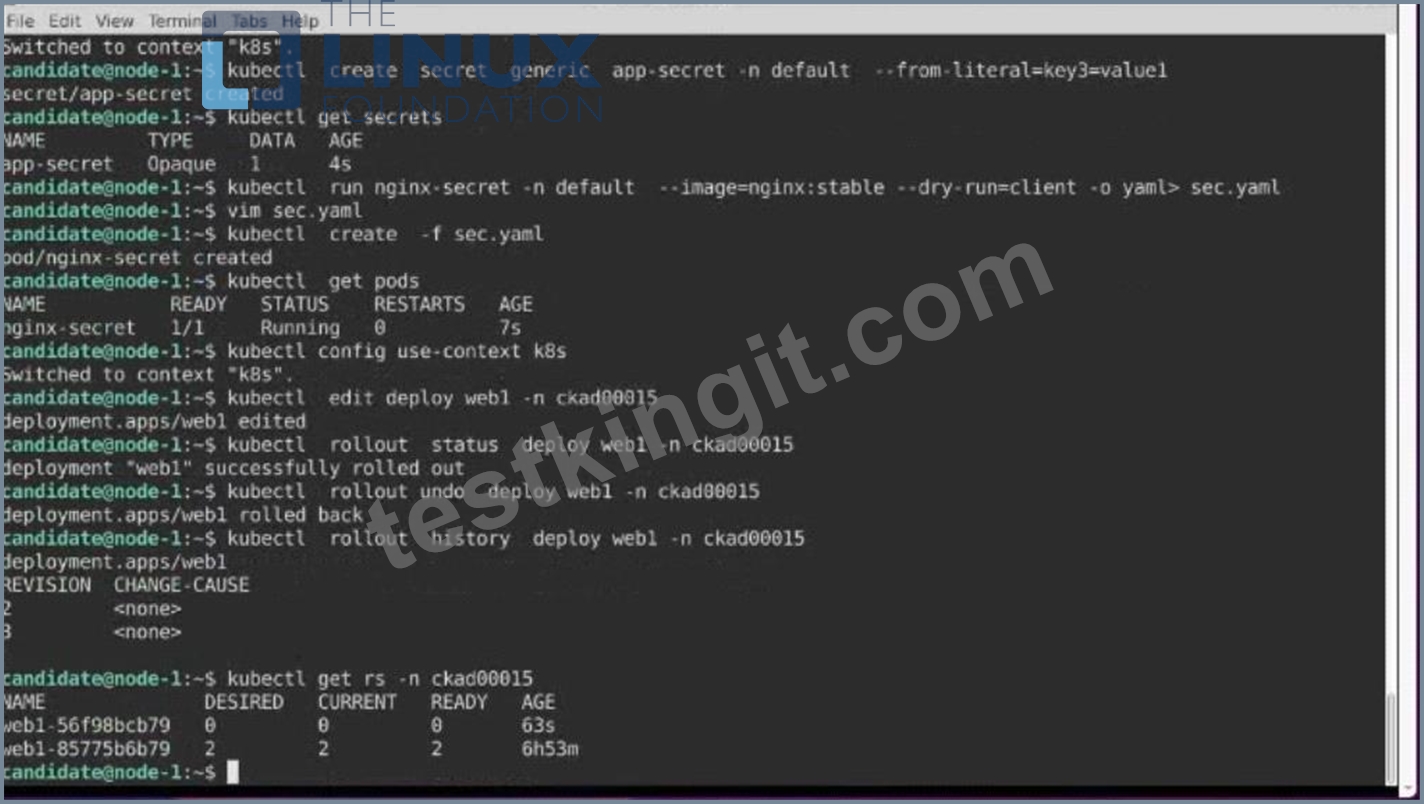
1- Update the Propertunel scaling configuration of the Deployment web1 in the ckad00015 namespace setting maxSurge to 2 and maxUnavailable to 59
2- Update the web1 Deployment to use version tag 1.13.7 for the Ifconf/nginx container image.
3- Perform a rollback of the web1 Deployment to its previous version
Answer:
Explanation:
Solution:
NEW QUESTION # 30
Refer to Exhibit.
Task
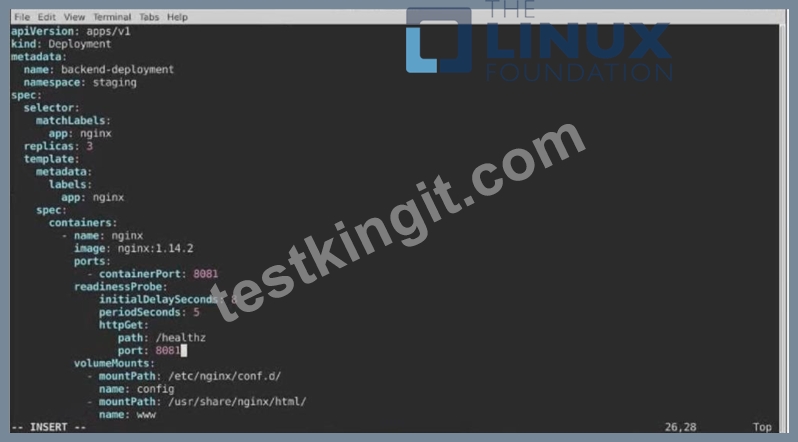
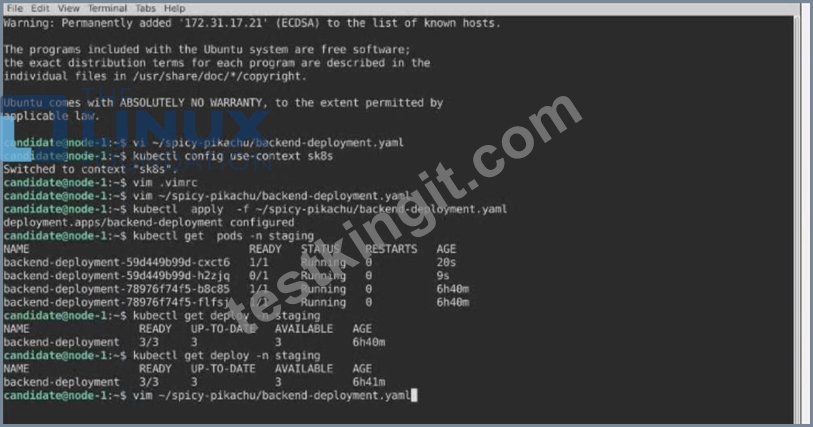
A Deployment named backend-deployment in namespace staging runs a web application on port 8081.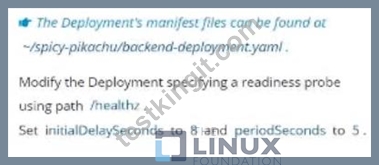
Answer:
Explanation:
Solution: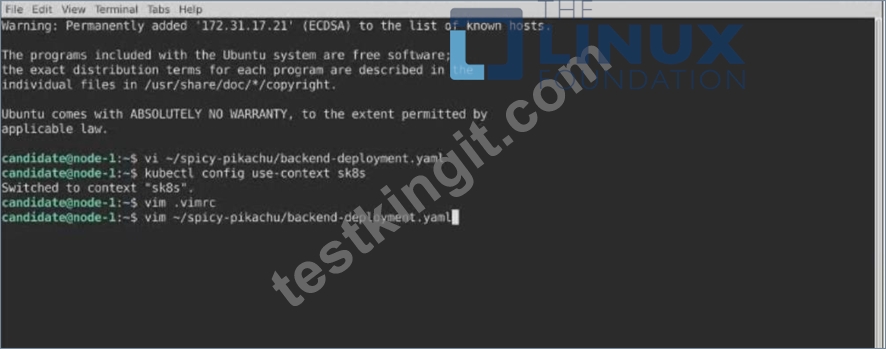
NEW QUESTION # 31 
Context
A container within the poller pod is hard-coded to connect the nginxsvc service on port 90 . As this port changes to 5050 an additional container needs to be added to the poller pod which adapts the container to connect to this new port. This should be realized as an ambassador container within the pod.
Task
* Update the nginxsvc service to serve on port 5050.
* Add an HAproxy container named haproxy bound to port 90 to the poller pod and deploy the enhanced pod.
Use the image haproxy and inject the configuration located at /opt/KDMC00101/haproxy.cfg, with a ConfigMap named haproxy-config, mounted into the container so that haproxy.cfg is available at
/usr/local/etc/haproxy/haproxy.cfg. Ensure that you update the args of the poller container to connect to localhost instead of nginxsvc so that the connection is correctly proxied to the new service endpoint. You must not modify the port of the endpoint in poller's args . The spec file used to create the initial poller pod is available in /opt/KDMC00101/poller.yaml See the solution below.
Answer:
Explanation:
Explanation
Solution:
apiVersion: apps/v1
kind: Deployment
metadata:
name: my-nginx
spec:
selector:
matchLabels:
run: my-nginx
replicas: 2
template:
metadata:
labels:
run: my-nginx
spec:
containers:
- name: my-nginx
image: nginx
ports:
- containerPort: 90
This makes it accessible from any node in your cluster. Check the nodes the Pod is running on:
kubectl apply -f ./run-my-nginx.yaml
kubectl get pods -l run=my-nginx -o wide
NAME READY STATUS RESTARTS AGE IP NODE
my-nginx-3800858182-jr4a2 1/1 Running 0 13s 10.244.3.4 kubernetes-minion-905m my-nginx-3800858182-kna2y 1/1 Running 0 13s 10.244.2.5 kubernetes-minion-ljyd Check your pods' IPs:
kubectl get pods -l run=my-nginx -o yaml | grep podIP
podIP: 10.244.3.4
podIP: 10.244.2.5
NEW QUESTION # 32
......
Latest Linux Foundation CKAD Practice Test Questions: https://www.testkingit.com/Linux-Foundation/latest-CKAD-exam-dumps.html
Apr-2023 Pass Linux Foundation CKAD Exam in First Attempt Easily: https://drive.google.com/open?id=1tQmIaJtlSuyYJ1Z-f-ylnDx7VG1a4JTo